


08 Oct Why we should all be Swifties.
Taylor Swift: The Artist Who Built a Kingdom — and Keeps Her Heart in It
Taylor Alison Swift has long been more than just a singer-songwriter. She is auteur, strategist, provocateur, and — perhaps most importantly — a believer. Her career reads like a masterclass in artistic longevity: always evolving, always risk-taking, and always rooted in authenticity.
The world has watched her rise — from a Pennsylvania teenager with a guitar, to a Nashville country prodigy, to a global pop powerhouse, to a cultural architect who defines what it means to own your story. Yet, unlike many stars who crest and collapse, Swift has only climbed higher.
How? Through sheer talent, entrepreneurial vision, and a moral compass that insists on integrity even at the height of fame.
1. The Foundations: Beliefs, Identity & Authenticity
Swift’s songwriting has always been built on transparency and confession. She writes in first person, drops real names, exposes contradictions. This commitment to being “seen” gives her a unique credibility: fans trust she is telling her story, not performing a character.
Her beliefs extend beyond music:
-
Family roots: Raised by parents Andrea (a former mutual fund marketing executive) and Scott Swift (a financial advisor), Taylor credits her close-knit family with grounding her career. Her younger brother, Austin, is an actor and producer who remains part of her inner circle. Andrea Swift’s well-publicized battle with cancer has been central to Taylor’s personal life, deepening her advocacy for healthcare awareness.
-
Values & advocacy: Swift has been outspoken on women’s rights, LGBTQ+ rights, and political engagement — most notably urging young fans to register and vote.
-
Faith & morality: Raised in a Presbyterian family, Swift has said her faith underpins her belief in fairness and accountability, though she is not overtly religious in public life.
-
Core belief: Artistry is power, but only if you control it. Her decade-long fight to own her masters, her insistence on artist rights, and her creative independence reflect that philosophy.
2. Talent & Reinvention
Few artists have shifted genres as fluidly as Swift:
-
Country storyteller (Taylor Swift, Fearless).
-
Pop innovator (1989, Reputation).
-
Indie-folk narrator (Folklore, Evermore).
-
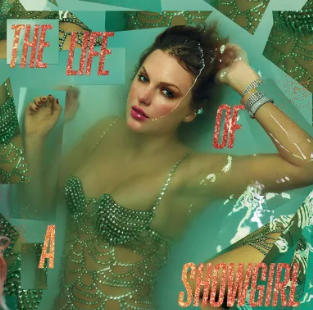
Theatrical superstar (The Life of a Showgirl).
The genius of her “Eras” framework is narrative: it allows her to reinvent herself while remaining coherent. Each album is not just music but a chapter in her mythos.
3. Entrepreneurial Vision: She Owns Her Story
Swift is as much an entrepreneur as an artist.
-
Re-recording her catalog: After losing control of her early masters, she released “Taylor’s Versions” of her albums — reclaiming royalties and reasserting creative sovereignty.
-
Owning her masters: In 2025, she regained ownership of her catalog, ending years of battles.
-
Merchandising & drops: Each album cycle is a multi-layered business plan — with special editions, merchandise drops, and Easter eggs that transform fans into collaborators.
-
Strategic secrecy: She finished The Life of a Showgirl in Sweden without even telling her label, controlling the narrative from inception.
-
Industry recognition: Forbes calls her a “business role model,” and universities now study her as a case study in entrepreneurship.
Swift has proven that artistry and enterprise are not opposites — they are inseparable.
4. The Life of a Showgirl: The Latest Chapter
Her 12th studio album, released October 3, 2025, may be her boldest statement yet.
-
Commercial triumph: Sold 2.7 million copies in its first day in the U.S., breaking Adele’s record for fastest first-week sales.
-
Collaborators: Recorded mid-tour in Sweden with Max Martin and Shellback, longtime partners in her pop evolution.
-
Thematic ambition: Critics note the album leans into theatrical fantasy, embracing Swift’s stage persona as “a gilded performance” rather than retreating from it.
-
Her response to critics: “Everybody is allowed to feel exactly how they want” about her work — a characteristically measured acknowledgment without defensiveness.
Showgirl feels like a culmination: Swift, no longer apologizing for fame, instead treats it as material.
5. Chronology of Her Life & Career
1989–2005: Early Years
-
Born December 13, 1989, in Reading, Pennsylvania.
-
Moved to Nashville at 14; signed with Big Machine Records.
2006–2009: Breakthrough
-
Taylor Swift (2006) introduces her as a teenage country star.
-
Fearless (2008) wins Grammy for Album of the Year (youngest artist at the time).
2010–2017: Reinvention
-
Speak Now (2010): wrote every song herself.
-
Red (2012): country-pop crossover.
-
1989 (2014): full pop pivot, second Album of the Year Grammy.
-
Reputation (2017): confronts media backlash with darker image.
2019–2022: Folklore & Self-Definition
-
Lover (2019): optimistic return.
-
Folklore & Evermore (2020): indie folk masterpieces during pandemic; Folklore wins Album of the Year (her third).
-
Begins re-recording old albums.
2023–2024: The Eras Era
-
Eras Tour becomes the highest-grossing tour in history ($1B+).
-
Eras Tour film becomes global cultural event.
-
Time’s Person of the Year (2023).
2025: Showgirl & Sovereignty
-
Releases The Life of a Showgirl.
-
Regains ownership of her masters.
-
At 35, cements herself as both a generational artist and a corporate force.
6. Accomplishments
-
12 studio albums, 3 Album of the Year Grammys (Fearless, 1989, Folklore).
-
Over 200 million records sold globally.
-
Billboard Artist of the Decade (2010s).
-
Time Person of the Year (2023).
-
Eras Tour: highest-grossing tour of all time.
-
First artist to fully reclaim her catalog through re-recordings.
7. Why She Never Sells Out
-
Controls her narrative: From surprise drops to media silence, she dictates terms.
-
Aligns with her fans: She cultivates trust through honesty, Easter eggs, and co-created mythologies.
-
Stays moral: Speaks on issues without being opportunistic.
-
Reinvents without betraying: Evolves genres without losing her core voice.
M2 Take: The Blueprint of Creative Sovereignty
Taylor Swift’s career is not an accident — it’s an architecture.
-
She has married art and entrepreneurship, proving the two need not conflict.
-
She has shown that owning your work is as essential as creating it.
-
She has built not just songs, but a serialized mythos that ensures longevity.
-
She is proof that you can be relentlessly commercial while remaining authentically personal.
In The Life of a Showgirl, Swift embraces her stardom as spectacle. It’s not humility; it’s sovereignty. She is no longer just narrating heartbreak or reinvention — she’s narrating the very act of being Taylor Swift.
And that’s why she continues to rise: because she tells her story, on her terms, and invites the world to sing along.