
08 Oct Rise of the machines.

From Assembly Line to Care Companion: The Robotics Revolution
Robots have quietly dominated factories for decades. But a new wave is on the rise — one that blends industrial precision with human proximity. Before we get to caretaker bots, let’s start where the momentum is strongest: manufacturing.
1. Robots in Manufacturing — The New Norm
Robotics in factories is hardly new. Think of articulated arms welding car bodies, CNC machines handling parts, and automated guided vehicles shuttling materials. But what’s new is flexibility, multipurpose robots, and humanoid forms entering the mix.
BMW & Humanoid Trials at Spartanburg
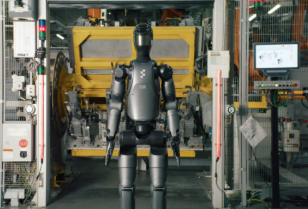
BMW is among the earliest legacy automakers experimenting with humanoid robots on the assembly floor. In Spartanburg, South Carolina, BMW has trialed the Figure 02 robot (from the company Figure) for tasks like inserting sheet-metal parts into fixtures — work previously done by humans. The pilot is part of BMW’s broader iFACTORY vision. IOT World Today+3BMW Group+3WardsAuto+3
Key highlights:
-
The robot can open doors, climb stairs, grip tools, and carry parts. WardsAuto+1
-
BMW emphasizes these are early trials, focused on discovering how to integrate robots into existing systems — not wholesale replacement. GSA Business Report+2BMW Group PressClub+2
-
For example, the robot demonstrated “tactile capabilities” in aligning sheet metal in tight fixtures. BMW Group+2BMW Group PressClub+2
This marks one of the first real uses of humanoid robotics inside an auto manufacturing line. The goal is to relieve humans from ergonomically difficult, repetitive, or fatigue-prone tasks, not to replace them entirely — at least not (yet). GSA Business Report+4BMW Group PressClub+4IOT World Today+4
Other Manufacturing Robotics Leaders
Beyond humanoids, many firms use robots in advanced ways. Some key players:
-
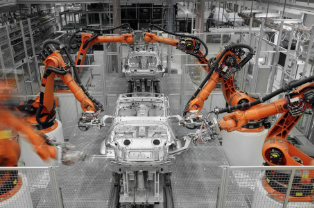
KUKA (Germany) is a longtime leader in industrial automation. It provides robotic arms and systems to automotive, aerospace, and general manufacturing. Wikipedia
-
ABB, Fanuc, Yaskawa, Universal Robots, Kawasaki, Mitsubishi Electric — all dominant in factory automation, delivery, precision, and multi-axis motion. (These names are well-known in robotics literature; though not always in headlines, they form the backbone of industrial automation.)
-
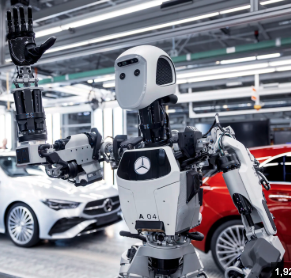
Mercedes-Benz is investing in humanoid robotics: it has taken a stake in Apptronik (a U.S. robotics firm) and is testing Apollo robots in its factories for repetitive or hazardous tasks in Berlin and Hungary. Reuters
The pattern is: use robotics where it’s mature (repetitive, high-precision, structured tasks), and test more advanced, multipurpose forms (humanoids, mobile manipulators) where flexibility is valuable.
2. The Bridge: Human-Assist & Companion Robots
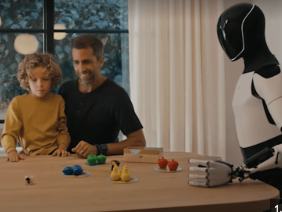
If manufacturing robots handle steel, motors, and line work, human-assist robots aim to handle real-world, human contexts: caregiving, home assistance, companionship, health monitoring, logistics in homes, etc.
Who’s Leading the Charge?
-
Tesla (Optimus)
Tesla has been pushing its humanoid robot Optimus as a major future frontier. Its ambitions: robots that help with chores, logistics, “3K” jobs in Japan (kiken: dangerous, kitanai: dirty, kitsui: tough), even companionship. Tomorrow Access+1
The current model, Optimus Gen 2, is capable of balancing, lifting objects, traversing uneven terrain, and recognizing environments. Built In+1
Elon Musk has claimed that 80% of Tesla’s future value might come from Optimus. Business Insider -
Figure AI
The same company behind BMW’s humanoid trials, Figure, is positioning itself toward general-purpose, multipurpose humanoids. WardsAuto+4BMW Group+4Ross Dawson+4 -
Sanctuary AI, Qihan, Boston Dynamics (in adjacent spaces)
Emerging firms working on humanoids and assistive bots make the shortlist of rising names. Ross Dawson -
Service / Companion / Care Robots Already in Use
-
Lio — a mobile robot used in healthcare settings, assisting staff and patients with errands, monitoring, etc. arXiv
-
Pepper — created by SoftBank / Aldebaran, used in customer service, retail, reception tasks. Wikipedia
-
Toyota Partner Robots — earlier experiments in humanoid / assistive robots. Wikipedia
-
Wakamaru — in Japan, a domestic robot for natural communication (though more limited in capability) introduced by Mitsubishi. Wikipedia
-
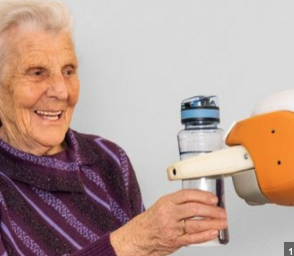
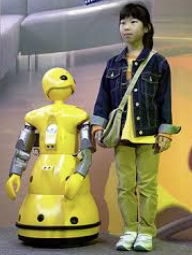
Some countries, particularly Japan, have long been early adopters of service & assist robots (elder care, hospitality). The cultural, regulatory, social acceptance is higher in some Asian markets for integrating robots into daily life.
The Reality Timeline: When Will It Be Real?
It’s helpful to think in phases:
| Phase | Capabilities | Realistic Timeline* |
|---|---|---|
| Assistive / semi-autonomous | Navigation, object handling, teleoperation, aid in structured homes/environments | Already in pilot stages in care settings; modest scaling in 5–10 years |
| Companionship / social robots | Conversation, emotion recognition, learning routines, assistance, mobility | ~10–20+ years (depending on AI, energy, safety) |
| Fully autonomous humanoids in daily life | Dynamic tasks, judgment, adaptation, general modalities | Decades — with incremental rollouts in constrained settings first |
* Timelines are speculative and depend on progress in AI, battery tech, safety, regulation, cost scaling, public acceptance.
Tesla has sometimes suggested Optimus could already begin to perform factory or logistics tasks by year-end (depending on statements), but that’s an aggressive target. Ross Dawson+3Reuters+3Business Insider+3
Safety, control, and regulatory frameworks will lag behind capability. A robot that can move freely among humans at scale must meet extremely high reliability, fault tolerance, and ethical constraints.
3. Challenges & Realities
Some of the major hurdles:
-
Energy, power & battery life: carrying power, weight, and runtime trade-offs are a bottleneck.
-
Perception, manipulation, dexterity: grasping irregular objects in unstructured environments remains very hard.
-
Safety, fault tolerance, human-robot interaction: collisions, unexpected behavior, liability are critical concerns.
-
Cost & scale: Until costs come down dramatically, deploying companion robots broadly is prohibitive.
-
Acceptability & regulation: privacy, data, ethics, human trust — all must be addressed.
-
Interoperability & environment: homes, care settings, businesses vary, so adaptability matters.
Even in manufacturing, humanoids are being phased in slowly, in trials, and typically in hybrid human-robot workflows.
4. M2 Take: Why This Matters for Brands, Media & Strategy
The robotics trajectory is not just engineering wizardry — it’s reshaping value, labor, experience, and narrative.
-
Robots blur the line between product, infrastructure, and experience. A “robot companion” isn’t a device you sell; it’s an ecosystem you manage (software, updates, AI data, services).
-
First adopters gain narrative advantage. When one brand ties itself credibly to companion robotics (with empathy, safety, design), it becomes a future anchor for emotional trust.
-
Labor ecosystem will morph. Some roles (menial, repetitive) may shrink. Others (human oversight, design, empathy interfaces, regulation, repair) will grow.
-
Content & brand storytelling must evolve. The narrative of “tech that cares” is distinct from “tech that automates.” Positioning matters.
-
Ethics, transparency & human-centric control are essential. In companion robotics, trust is everything. Bias, failure, misuse are existential risks.
In short: robotics in manufacturing is no longer an experiment — it’s scaling. The leap to human-assist/companion is coming, and brands that frame themselves as humane, trustworthy, and anticipatory will win more than mindshare — they’ll shape the future interface between human and machine.