
milk* media
What we are reading

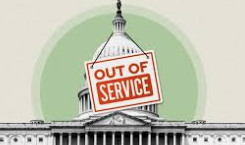
The Government Is Shutting Down (Again). Here’s What That Actually Means — and Why Washington Can’t Get Its Act Together
 

“It’s like déjà vu all over again.”

America is staring down another government shutdown — not because we’re broke, but because Congress is broken.

This isn’t about economics. It’s political trench warfare: budgets, egos, and ideological hostage-taking wrapped in a procedural clock. And just like every time before, millions of Americans who didn’t pick this fight will end up paying for it.

Here’s what’s driving the crisis, who’s about to feel it hardest, and how long this mess could last.

Why Is the Government Shutting Down?

Because Congress failed to pass the funding bills required to keep the federal government open.

Two things usually cause this:

  1. Extremist factions refusing compromise — Often within the same party.

  2. Leaders using funding deadlines as leverage — to force unrelated policy wins.

This time, the fight centers around:

  • Budget caps and spending cuts

  • Ukraine aid

  • Border and immigration funding

  • Social program cuts

  • Internal power struggles in the House

Translation: It’s not that Congress can’t fund the government — it’s that they won’t unless they get their way.


What Actually Shuts Down?

A shutdown doesn’t close the entire government — but it freezes anything not classified as “essential.” Here’s how it breaks down:

Still operating (but strained):

  • Active-duty military (without pay)

  • Air traffic control

  • Border patrol

  • Federal prisons

  • VA hospitals and emergency care

  • Social Security and Medicare payments

Paused, cut back, or closed:

  • National parks and museums

  • IRS call centers and audits

  • Federal loan processing

  • Food safety inspections (reduced)

  • Passport and visa services (delayed)

  • EPA, NIH, and research agencies

  • Small business loans and grants

Roughly 2 million federal employees and 1.3 million active-duty military personnel will either work without pay or be furloughed.


Who Feels It the Most?

1. Federal Workers & Military Families
TSA agents, food inspectors, researchers, administrative staff, contractors — many won’t see paychecks.

2. Low-Income Americans
Programs relying on annual appropriations take a hit:

  • WIC & SNAP (food assistance)

  • Housing vouchers

  • Head Start programs

  • Tribal services

3. Small Businesses & Contractors
Federal contracts stall. SBA loans freeze.

4. Travelers & Tourists
Parks close. Passport wait times explode. Transportation safety thins out.

5. The Economy
Every shutdown slows spending and disrupts markets. A longer one risks slipping into recession territory.


How Long Could It Last?

Historically:

  • The 1995–96 shutdown lasted 21 days

  • The 2013 shutdown: 16 days

  • The 2018–19 shutdown: 35 days (longest in U.S. history)

This one depends on:

  • Whether party leadership can wrangle hardliners

  • How much public outrage hits Congress

  • Whether political pressure forces a “clean” funding extension

Shortest scenario: A last-minute temporary funding deal (called a continuing resolution).
Likeliest scenario: A shutdown lasting 1–3 weeks until something breaks politically.
Worst case: Several weeks, with growing economic damage.


Why This Keeps Happening

Shutdowns aren’t a budgeting failure — they’re a governance strategy. A vocal bloc in Congress discovered years ago that threatening the basic functioning of the country works as leverage.

Shutdowns continue because:

  • There are no serious political penalties

  • They energize partisan bases

  • Leadership fears rebellion inside its own ranks

  • The public has gotten used to the dysfunction

Until something changes structurally — like eliminating shutdown threats altogether — we will keep doing this national Groundhog Day.


So When Will It End?

The shutdown ends when:

  • Leadership caves and passes a clean temporary bill

  • One side folds on policy demands

  • Voters start screaming loud enough for Congress to hear them

That could be in days… or weeks.

There’s no hero waiting in the wings — just pressure, polls, and panic.

m2 Take

A government shutdown isn’t a budget crisis — it’s a political stunt with real-world casualties. Lawmakers get to grandstand on cable news while millions of families lose paychecks, services stall, and essential workers keep the country running for free. The shutdown playbook survives because it works for the people causing it and punishes the people who can’t fight back. Until voters start treating manufactured chaos as failure — not strategy — Washington will keep pulling the pin and tossing it into the crowd.